Honest Comparisons
Best Bottle Warmers for New Moms: An Honest Comparison
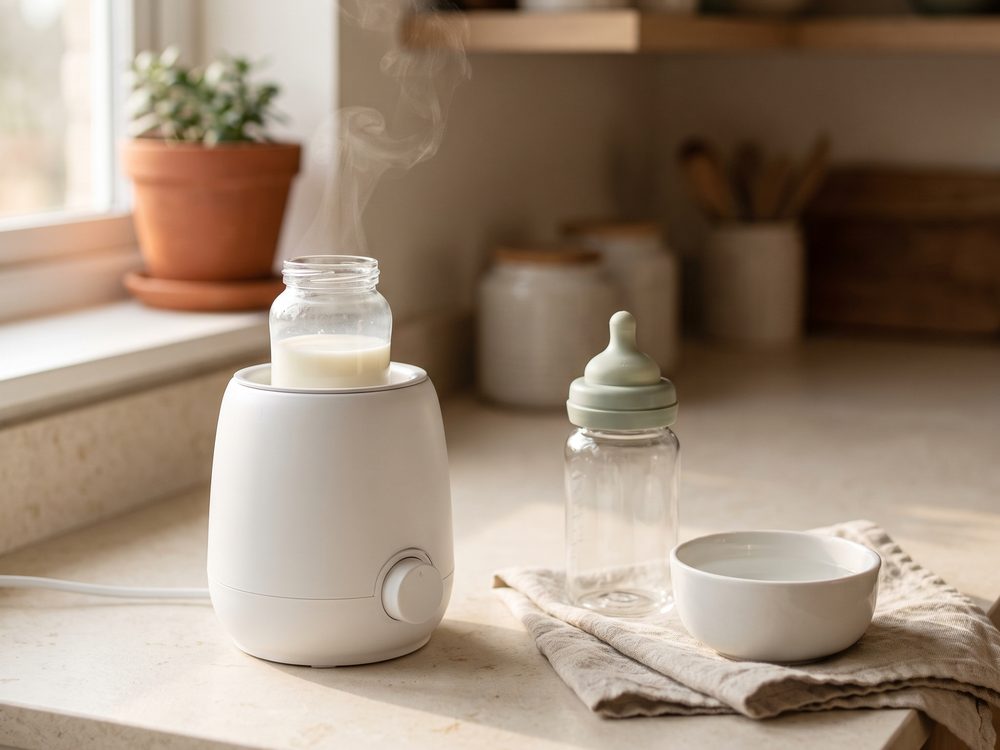
A warmer, a bottle, and a bowl of warm water. One of these three is the right answer for you — and it isn't the same one for everybody.
It's 3 a.m. Baby is doing the escalating warm-up cry. There is a bag of milk in the fridge and you are standing at the sink running it under the tap, one-handed, counting the seconds and wondering whether a $40 appliance would have bought you four minutes of sleep.
That's the whole question. Not "which bottle warmer is best" in the abstract — but whether the one you're about to buy actually shortens your version of that moment.
Full honesty up front: this isn't a lab test. We haven't run thermal probes through a dozen units or timed them on a stopwatch. This breakdown is based on published specs, years of feedback from bottle-feeding and pumping Mamas, and what actually matters when you're operating with one hand and no patience. (If you're still working out where the milk itself should live, start with our breast milk storage bags vs containers comparison.)
This post contains affiliate links. If you buy through them, we may earn a small commission — at no extra cost to you. We only point to things we'd actually tell a friend to get.
The short answer
- A bowl of warm water costs nothing and works. If you warm one or two bottles a day at home, you may genuinely not need an appliance.
- Water-bath warmers are the gentle, boring, reliable middle. Slowest, least likely to overheat anything.
- Steam warmers are the fast ones. Great when speed is the point — but they run hotter and need more attention.
- Smart / precision warmers hold a set temperature and take the guesswork out. Best for night feeds and frozen milk, worst for your budget and counter space.
- Portable warmers solve exactly one problem: warm milk away from an outlet. Nothing else does that.
Most families end up with one countertop warmer and a low-tech backup. That's not overbuying — that's what actually happens.
First: do you even need one?
Plenty of babies drink milk cold or at room temperature and never think about it again. Warming isn't a nutritional requirement — it's a preference, usually the baby's. So the honest starting point is: try a room-temperature bottle before you buy anything. If baby takes it, you've just saved yourself $40 and a piece of counter clutter.
Where a warmer earns its keep is when three things are true at once: your baby clearly prefers warm milk, you're feeding several bottles a day, and at least one of those feeds happens in the dark when you are not at your best. That combination is what makes people say the warmer was the best forty dollars they spent.
One thing every source agrees on, and worth saying plainly: don't microwave milk. Microwaves heat unevenly and create hot spots that can scald a baby's mouth even when the outside of the bottle feels fine. That's the single practical safety rule underneath this entire category. Anything about your own baby's feeds, milk handling, or feeding plan is a conversation for your pediatrician or an IBCLC — not a blog post.
Water-bath warmers (the gentle standard)
Who they're for: most people. Especially anyone warming expressed breast milk who'd rather err on the side of slow and gentle.
A water-bath warmer does exactly what you'd do at the sink, just without you standing there: it surrounds the bottle with warm water and heats it gradually. Models like the Philips Avent bottle warmer and the well-loved Kiinde Kozii warmer use a warm-water-bath approach specifically because it's harder to overshoot. If you want the simplest possible version, a basic no-frills countertop bottle warmer does the job for less.
The honest cons:
- Slow. Four to eight minutes is normal, longer from the fridge. At 3 a.m. with a screaming baby, four minutes is not a short time.
- You refill the water. Every single cycle, in the dark, usually with one hand.
- Mineral scale. Hard water leaves deposits, so you'll be descaling with vinegar every few weeks or watching performance slide.
- Fit is not universal. Wide-neck, angled, and tall bottles don't all sit properly. Check your bottle against the well before you commit.
Steam warmers (the fast ones)
Who they're for: formula feeders, families doing many bottles a day, and anyone whose baby goes from calm to inconsolable in ninety seconds.
Steam warmers use a small amount of water flashed to steam, which heats a bottle in roughly one to three minutes. A Dr. Brown's steam bottle warmer or a Chicco digital warmer is the shape most people picture when they hear "bottle warmer." Many double as baby-food-jar warmers, which is a real bonus around month six.
The honest cons:
- Easier to overheat. Speed cuts both ways. Overshooting is more likely here than with a water bath, so the timer settings matter and you should always check the temperature yourself.
- Fussier settings. Time varies with bottle size, material, and starting temperature. There's a genuine learning period of a week or two.
- Scale again, worse. Steam units are more sensitive to mineral buildup. Distilled water helps; descaling is non-negotiable.
- Hot steam near your hands while you're half asleep. Not dangerous with care, but it's a real thing at 3 a.m.
Warm bottle handled. Now, dinner.
Recipes, research, and real-Mama Q&A every Tuesday. Try the Weekly for $1 your first month.
See the Weekly →Smart and precision warmers (set it and stop thinking)
Who they're for: night-feed households, people warming frozen milk regularly, and anyone who wants one less decision to make at 3 a.m.
The premium tier — think the Baby Brezza Safe + Smart warmer or any digital bottle warmer with temperature control — lets you pick a target temperature and bottle size, then handles the rest. Most include a defrost mode for frozen milk and a keep-warm setting so the bottle doesn't go cold while you're changing a diaper. Several have app control, which sounds ridiculous until the night you start the warmer from bed.
The honest cons:
- Two to three times the price of a basic warmer, for a device you'll use for maybe a year.
- Bigger footprint. These are not small, and counter space in a house with a newborn is a genuinely scarce resource.
- More to go wrong. Sensors, screens, and apps are all things a bowl of water doesn't have.
- Still needs its own routine. Cleaning, descaling, and settings that drift if you switch bottle brands.
Portable and travel warmers
Who they're for: car-seat feeds, long drives, flights, and anyone whose baby will not take a cold bottle in a parking lot.
This is the one category that solves a problem nothing else can. A cordless travel bottle warmer runs on a rechargeable battery and warms a bottle in the back seat. The low-tech version costs a fraction as much: a thermos of hot water plus an insulated bottle bag lets you make your own warm-water bath anywhere, with nothing to charge.
The honest cons:
- Slow, and slower when cold. Battery warmers take longer than a plug-in unit, and cold cars make it worse.
- Another thing to charge. A dead travel warmer is exactly as useful as no travel warmer.
- Uneven heating. Sleeve-style warmers can heat one side more than the other. Swirl the bottle and check before feeding, every time.
- Bottle-fit limits are tighter than on countertop models — many sleeves fit only narrow bottles.
The free option: a bowl of warm water
Who it's for: occasional warmers, minimalists, small kitchens, tight budgets, and anyone who just wants to try before buying.
Stand the bottle in a mug or bowl of warm — not boiling — tap water for a few minutes, swirl, and test. It's free, there's nothing to descale, it fits every bottle ever made, and it will never break. Honestly, a lot of families do this for a month and discover they never needed the appliance. A cheap milk thermometer makes it feel a lot less like guessing.
The honest cons:
- It needs you. There's no timer and no auto-shutoff — you're the appliance, at 3 a.m., every time.
- Genuinely inconsistent. Tap temperature varies by season, house, and how long you let it run.
- Two hands. Filling a bowl and swirling a bottle while holding a baby is a special kind of trick.
- Slow from frozen. For frozen milk this is the least convenient option by a wide margin.
Side by side
| Water bath | Steam | Smart / precision | Portable | Bowl of warm water | |
|---|---|---|---|---|---|
| Typical speed | 4–8 min | 1–3 min | 2–5 min, set-and-hold | 5–10 min | 3–8 min |
| Overheat risk | Lowest | Higher — watch it | Low (controlled) | Uneven, not hot | Low |
| Cost | $ | $$ | $$$ | $$ | Free |
| Counter space | Small | Small–medium | Largest | None (travels) | None |
| Frozen milk | Slow but gentle | Not ideal | Best — defrost mode | Poor | Poor |
| Refill water each use | Yes | Yes | Yes | Usually no | Yes |
| Descaling needed | Yes | Yes, more often | Yes | Minimal | None |
| Fits odd bottle shapes | Mostly | Mostly | Usually, with adapters | Often not | Always |
| Works without an outlet | No | No | No | Yes | Yes, with hot water |
| One-handed at 3 a.m. | Fair | Fair | Best | Fair | Worst |
The verdicts
Buying notes that matter more than the brand
- Check it against your bottle first. This is the number one regret. Wide-neck, angled, and glass bottles don't all fit every well — measure before you order.
- Auto-shutoff is not optional. Sleep-deprived people forget things. Buy the model that turns itself off.
- Test the temperature yourself, every time. A few drops on the inside of your wrist should feel neutral — not hot. Machines drift; wrists don't.
- Never microwave, and swirl rather than shake vigorously to even out the temperature.
- Plan for descaling from day one. White vinegar, a few weeks apart. Skipping it is why warmers "stop working."
- Put it where you feed. A warmer in the kitchen when you feed upstairs is a warmer you won't use. Our nursing station checklist covers building that spot properly, and a compact drying rack nearby saves a lot of trips.
Frequently asked questions
Do I actually need a bottle warmer?
No — it's a convenience, not a requirement. Many babies drink milk cold or at room temperature without complaint. Try a room-temperature bottle first; if your baby takes it, you've saved yourself the purchase. A warmer becomes genuinely worth it when your baby clearly prefers warm milk and you're doing multiple bottles a day, especially overnight.
Can I use a bottle warmer for breast milk?
Yes, and most are designed with that in mind. Gentle, controlled warming is the goal — which is why water-bath and precision warmers are often preferred for expressed milk over fast, hot methods. Follow the manufacturer's instructions, and take any questions about handling your own milk to an IBCLC or your healthcare provider.
Why can't I just microwave the bottle?
Microwaves heat unevenly and create pockets of very hot liquid, so a bottle can feel fine on the outside while containing milk hot enough to scald. That's the reason the whole warmer category exists. If you're in a hurry with no warmer, a bowl of warm water is the safer fast option.
How warm should the bottle be?
Body temperature is the usual target — it should feel neutral, not hot, when you put a few drops on the inside of your wrist. Test every bottle yourself before feeding, no matter how reliable the appliance has been so far.
Steam or water bath — which is better?
Water bath is gentler and harder to overshoot; steam is meaningfully faster. If you're mostly warming expressed breast milk and aren't in a rush, water bath. If you're doing many bottles a day and speed is the pain point, steam — with a little practice on the timing settings.
Is a smart bottle warmer worth the extra money?
It depends entirely on your nights. If you're regularly warming frozen milk or doing multiple night feeds, the defrost and keep-warm settings buy you real mental quiet at 3 a.m. If you warm one bottle a day at dinnertime, the basic model does the same job for a third of the price.
Once the bottle's handled, feed yourself too
Here's the part nobody warns you about: you will get the bottle exactly right, sit down to feed, and realize you haven't eaten since breakfast. That's the gap we make things for — 10 Make-Ahead Meals to start, the Recipe Vault of 50 nursing-friendly recipes, and a Hydration & Snack Station printable for the spot where you actually feed. Prefer a paperback on the shelf? The full Nourished Mamma Cookbook is on Amazon.
Ten make-ahead meals, free, in your inbox
Freezer-friendly, one-handed, no cooking from scratch in the newborn fog. No card, no catch.
Grab the free meals →This article is educational and not medical advice. Questions about feeding, milk handling, or your baby's needs are great questions for your pediatrician or an IBCLC — and if your baby was born preterm or is under specialist care, follow your care team's guidance over general information. As an Amazon Associate we earn from qualifying purchases.