Honest Comparisons
Breast Milk Storage Bags vs Containers: Which Is Right for You?
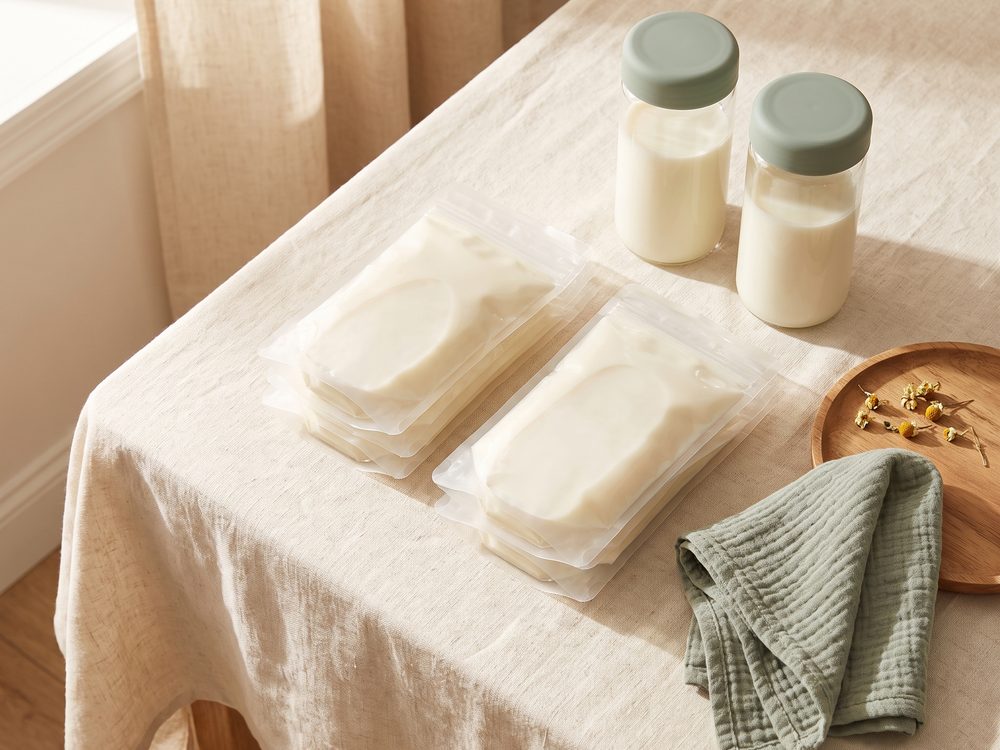
Bags stack. Bottles pour. Which one you want depends entirely on where the milk is going.
You did the hard part — you got the milk out. Now you're standing at the freezer at 11 p.m. wondering whether to pour it into a flimsy little bag or a bottle you'll have to wash again tomorrow. It's a small decision that quietly shapes the next six months: how much freezer space you have, how much washing you do, and how much milk you accidentally waste.
Full honesty up front: this isn't a lab test. We haven't run freezer-burn trials or measured seal failure rates. This breakdown is based on published specs, years of feedback from pumping Mamas, and what actually matters for one-handed newborn life. (If you're still choosing the pump that fills these, start with our manual vs electric pump comparison or the Spectra vs Medela breakdown first.)
This post contains affiliate links. If you buy through them, we may earn a small commission — at no extra cost to you. We only point to things we'd actually tell a friend to get.
The short answer
- Disposable bags are for the freezer stash. Nothing else stores this much milk in this little space.
- Hard containers (bottles and cups) are for milk you'll use in the next few days — fridge milk, daycare milk, the bottle your partner gives at 2 a.m.
- Reusable silicone bags are the middle ground: bag-shaped, freezer-friendly, and you wash them instead of buying them forever.
- Freezer trays are the specialist — for small, thaw-only-what-you-need portions.
Most Mamas end up with two of these, not one. That's not overbuying — it's the sensible answer.
Before you buy anything: the storage rules that decide this
The CDC's commonly cited guidance for healthy, full-term babies is roughly: up to 4 hours at room temperature, up to 4 days in the fridge, and about 6 months (up to 12) in a deep freezer. That's the whole reason the bag-vs-container question exists — anything holds milk for four days, but only some things survive six months of freezer air.
If your baby was born early, is in the NICU, or has a medical condition, your hospital or provider will give you tighter storage rules — follow theirs over anything you read online, including this. Questions about your own milk, output, or feeding plan belong with an IBCLC or your healthcare provider.
Disposable milk storage bags
Who they're for: anyone building a freezer stash — going back to work, pumping extra, or just banking a little cushion.
Purpose-made breast milk storage bags are pre-sterilized, double-zippered, and designed to be frozen flat. Frozen flat, a 6-ounce bag is about as thick as a paperback — you can fit a genuinely startling amount of milk in one freezer drawer, standing on end like files.
The popular ones differ more than you'd think. Lansinoh bags are the default for a reason — thick, reliable seal, easy to write on. Medela Pump & Save bags come with an adapter so you can pump straight into the bag and skip a transfer. Dr. Brown's bags have a wide base that stands up on the counter while you pour. Nanobebe bags are shaped to lie flat and thaw quickly.
The honest cons:
- You buy them forever. At a bag or two a day, that's a real running cost, and it never stops until you do.
- They leak. Not often, but it happens — a stressed seam, an overfilled bag, a sharp freezer edge. Losing a bag of milk stings in a way that's hard to explain to anyone who hasn't pumped.
- Pouring is a two-hand job. Bags are floppy. Set them in a mug or a bag holder stand before you pour.
- Single-use plastic. If that bothers you, it'll keep bothering you 400 bags from now.
Reusable silicone bags
Who they're for: long-haul pumpers who want the flat-freezing shape without the endless restock, and anyone trying to cut down on disposables.
Reusable silicone milk bags freeze flat like a disposable bag but wash and go back in the drawer. Over a year of pumping, the math usually lands in their favor — and they're sturdier, so the freezer-tear anxiety mostly goes away.
The honest cons:
- Real upfront cost. A starter set costs what a few months of disposables do. If you're pumping for eight weeks, they won't pay for themselves.
- More dishes. You are already washing pump parts. This adds to that pile.
- They're bulkier than a disposable bag, so a full freezer drawer holds a bit less.
- Drying is fussy. Silicone holds water droplets; you'll want a drying rack and some patience.
Hard containers: bottles, cups, and glass
Who they're for: fridge milk, daycare milk, and anyone who'd rather not pour milk between vessels more than once.
Hard containers are the low-drama option for the short term. Pump-brand storage bottles screw straight onto the pump, so you pump into the same thing you store in and later feed from — the fewest transfers, the least spilled milk. Glass storage containers don't stain, don't hold smells, and are the pick if you'd rather keep milk out of plastic. Stackable storage cups are the tidiest fridge option — they stack straight and don't tip.
The honest cons:
- Freezer space. This is the big one. Bottles are cylinders; cylinders waste space. A stash that fills one drawer as flat bags will fill three as bottles.
- Washing, endlessly. Every container is another bottle, lid, and ring to wash and dry.
- Glass and freezers need care. Leave real headspace — milk expands — and check the manufacturer's freezer guidance before you commit a whole set to the deep freeze.
- Cost per unit is high if you want enough to keep a rolling supply going.
Pumping is hungry work. Dinner shouldn't be.
Get 10 free make-ahead meals for nursing Mamas — freezer-friendly, one-handed, in your inbox today. No card, no catch.
Grab the free meals →The hybrid: pouch systems and freezer trays
Two options don't fit either camp neatly.
Twist-style pouch systems let you pump into a pouch, freeze it, then screw a nipple onto that same pouch to feed — no transfers at all. Fewer dishes, less spillage. The trade-off: you're buying into one brand's ecosystem, the pouches cost more than plain bags, and you still buy them forever.
Silicone milk freezer trays freeze milk in 1-ounce sticks or cubes that pop out into a bag for storage. Brilliant if you're topping off bottles, starting solids later, or hate throwing away half a thawed 5-ounce bag. Less useful as your only system — you still need somewhere to put the frozen sticks.
Side by side
| Disposable bags | Reusable silicone bags | Hard bottles & cups | Freezer trays | |
|---|---|---|---|---|
| Best use | Long-term freezer stash | Long-term stash, reused | Fridge + next-few-days milk | Small top-off portions |
| Freezer space | Excellent — freeze flat, file upright | Very good | Poor — round and bulky | Good once popped out |
| Washing | None | Yes, every use | Yes, every use | Yes, every use |
| Ongoing cost | Forever | One-time, then none | One-time per set | One-time |
| Leak risk | Low but real | Very low | Very low | Low (transfer after freezing) |
| Pump straight into it | Some brands, with adapter | Usually no | Yes | No |
| Feed straight from it | No | No | Yes | No |
| Thaw speed | Fast (thin and flat) | Fast | Slow | Fastest |
| Waste if baby doesn't finish | Whole bag | Whole bag | Whole bottle | Just a cube |
The verdicts
The small things that save the most milk
Whichever you pick, the setup around it matters more than the brand.
- Freeze flat, always. Lay bags on a small sheet pan in the freezer overnight, then stand them upright in a freezer milk organizer. Oldest at the front.
- Store in 2–4 ounce portions. Smaller portions thaw faster and waste less when baby only takes half.
- Label everything with the date — a waterproof freezer label or a marker on the bag's white panel. Write on the bag before you fill it; a full bag is impossible to write on.
- Leave headspace. Milk expands when it freezes. Fill to the line, not the top.
- Get a cooler bag with an ice pack if you pump anywhere but home. It's the piece people forget until the first stressful commute.
And set up the spot where you'll actually do all this — our nursing station checklist applies double to pumping sessions, and the one-handed snack list exists because pumping burns through you.
Frequently asked questions
Can I use regular freezer bags or Ziplocs for breast milk?
It isn't recommended. Purpose-made milk bags are sold pre-sterilized, built from thicker food-grade material meant for freezing liquid, and sealed with a double zipper. Kitchen storage bags aren't made for that job, and a failed seam in the freezer costs you milk you worked for.
Is glass safer than plastic for storing breast milk?
Both are widely used and considered fine for milk storage. Glass doesn't stain, hold odors, or scratch, which some Mamas prefer; plastic is lighter and won't shatter. Whichever you choose, look for BPA-free plastic and check the manufacturer's freezer guidance before deep-freezing glass.
How much milk should I put in each bag?
Most Mamas land on 2–4 ounces per bag. It thaws faster, matches a typical feed better, and means a half-finished bottle costs you two ounces instead of six. A couple of bigger bags for growth-spurt days is a reasonable hedge.
Can I refreeze thawed breast milk?
No — thawed milk shouldn't be refrozen. Once it's thawed in the fridge it should be used within about 24 hours, and once baby has started a bottle, finish it within a couple of hours. Storing smaller portions is the simplest way to avoid the whole problem.
Do I really need both bags and bottles?
Most people find they do, and it's cheap to cover both. Bottles handle the milk you'll use this week; bags handle the milk you're banking for later. If you're pumping only occasionally and never freezing, bottles alone are plenty.
Why does my thawed milk smell soapy or metallic?
Some Mamas notice a soapy or metallic smell in thawed milk — it's a known and generally harmless phenomenon, and many babies drink it happily. If yours refuses it, that's worth a conversation with an IBCLC, who can talk you through options rather than leaving you guessing.
Once the milk's handled, feed yourself too
Pumping and storing takes hours a week that no one warns you about. The one thing that makes it survivable is not having to also figure out dinner. That's what we make: 10 Make-Ahead Meals to start, the Recipe Vault of 50 nursing-friendly recipes, and a Hydration & Snack Station printable for the spot where you pump. Prefer a paperback on the shelf? The full Nourished Mamma Cookbook is on Amazon.
Nourishment in your inbox every Tuesday
Recipes, research, and real-Mama Q&A. Try the Weekly for $1 your first month.
See the Weekly →This article is educational and not medical advice. Milk storage guidance, feeding plans, and any supply or safety concerns are great questions for your healthcare provider or an IBCLC — and if your baby is preterm or hospitalized, follow your care team's storage instructions over general guidance. As an Amazon Associate we earn from qualifying purchases.