Mama Questions
How Do I Meal Prep Before Baby Comes?
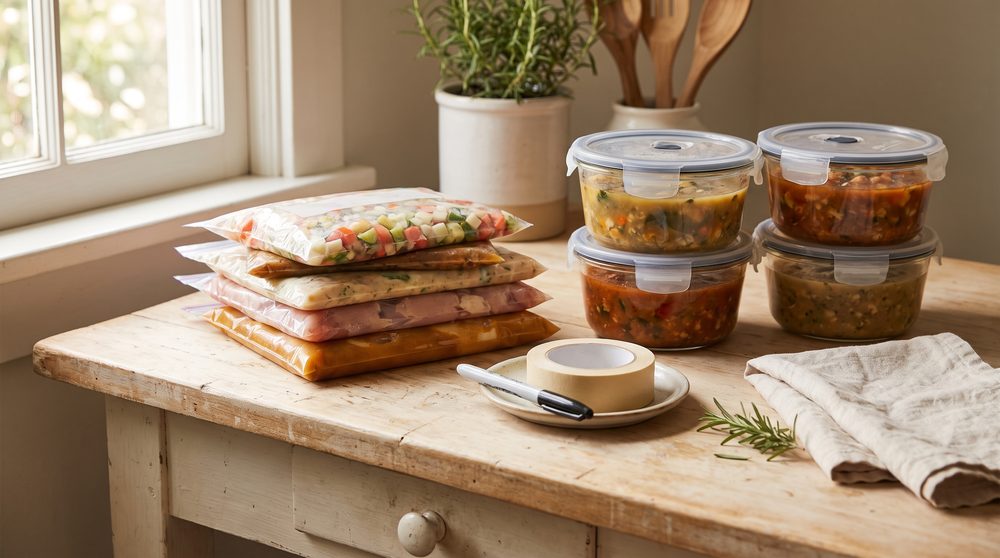
Flat bags, clear labels, a short afternoon. That's the whole method.
Quick answer: start about four to six weeks before your due date, aim for 10–15 meals rather than a whole freezer full, and work in two or three short sessions instead of one exhausting weekend. The easiest method is to simply double whatever you're already cooking and freeze the second batch. Freeze everything flat in labeled bags so it stacks like books and thaws fast.
Freezer prep has a reputation problem. Somewhere along the way it turned into a 40-meal marathon with a spreadsheet, a color-coded shopping list, and a Sunday that leaves you wrecked at 36 weeks pregnant. That version is why so many Mamas skip it entirely — and then find themselves at 6 p.m. on day four with a newborn, an empty fridge, and no plan.
The good news: the useful version of this is much smaller than the internet suggests. A dozen meals, done in pieces, is genuinely enough to change your first month.
This post contains affiliate links. If you buy through them, we may earn a small commission — at no extra cost to you. We only point to things we'd actually tell a friend to get.
The three rules that make it doable
Every workable prep plan comes down to the same three ideas. Get these right and the recipes barely matter.
- Double, don't cook extra. The lowest-effort freezer meal is the dinner you were already making, doubled. No separate prep day, no new recipes, no extra dishes — just a bigger pot and one more container.
- Freeze flat, always. A soup frozen flat in a gallon freezer bag takes maybe a third of the space of the same soup in a tub, stacks upright like a file, and thaws in a fraction of the time. A bag holder stand makes filling them a one-person job instead of a two-hand wrestling match.
- Label like you'll have amnesia. Because functionally, you will. Sleep-deprived you should never have to guess what's in the bag or how to heat it.
Everything below is detail on those three. Here are the questions Mamas actually send us.
When should I start meal prepping before baby comes?
Around 34–36 weeks is the sweet spot. It's late enough that the food is still at its best when you eat it, and early enough that you're not hauling grocery bags and standing at a counter at 39 weeks, when standing anywhere has lost its appeal.
If you'd rather spread it out even further, start the "double your dinner" habit at around 30 weeks. One extra container a week from 30 to 38 weeks quietly gets you eight meals with no prep day at all. That's the version we recommend most often, because it never feels like a project.
If you're carrying multiples, or your provider has mentioned the possibility of an earlier delivery, move everything earlier and talk the timing through with them.
How many freezer meals do I actually need?
Ten to fifteen dinners is plenty for most families. That covers roughly two to three weeks once you mix in leftovers, takeout nights, and food other people bring over.
The thirty-to-forty-meal goal you see on Pinterest is where prep stops being helpful. It costs a fortune in one grocery trip, it fills a freezer you may need for other things, and by week five most people are quietly sick of their own cooking. Twelve meals you genuinely like will get eaten. Forty will not.
One useful tweak: make fewer recipes in bigger batches, not more variety. Four recipes × three portions each beats twelve different dishes, and it's about a quarter of the work.
Can I do all my freezer prep in one weekend?
You can — but most people find two or three sessions of about ninety minutes far easier than one long day. A marathon prep session late in pregnancy is hard on your back, your feet, and your patience, and it means every single meal is frozen on the same date, so they all age out together.
Shorter sessions also spread the grocery bill across a few weeks instead of one eye-watering shop, and they let you sit down when you need to. A reasonable rhythm looks like this:
- Session 1 (~34 weeks): four raw "dump bags" for the slow cooker. Almost no cooking — just chopping and bagging.
- Session 2 (~36 weeks): one big pot of soup or chili and one baked pasta, portioned out.
- Session 3 (~37 weeks): breakfast and snacks — muffins, egg bites, smoothie bags.
Don't want to plan the recipes?
10 Make-Ahead Meals for New Mamas — freezer-friendly, one-handed, batch-cook instructions and a shopping list included. Instant download.
Shop the guide →What meals freeze the best?
Saucy, soft, and forgiving. If it's already soft and coated in liquid, it will reheat close to how it started. The reliable list:
- Soups, chilis, stews, curries. The undisputed champions. Freeze flat, thaw fast, taste better on day two.
- Raw dump bags. Raw protein + chopped veg + sauce, frozen together in a bag. Tip the frozen block into a programmable slow cooker in the morning and dinner cooks itself. Zero chopping on the day you eat it.
- Shredded meats and meatballs. Endlessly flexible — tacos, sandwiches, pasta, rice bowls.
- Casseroles and baked pasta. Assemble in a foil pan, freeze unbaked, bake from frozen.
- Burritos and hand pies. Wrap individually. The gold standard of one-handed food.
- Baked goods. Muffins, breakfast bars, pancakes, cooked oatmeal portions — a silicone muffin tin freezes perfect single servings that pop right out.
If you want actual recipes built for this, our postpartum freezer meals roundup and our dump-and-go slow cooker dinners are both designed around exactly these categories.
What doesn't freeze well?
A short list, and it's worth knowing before you spend a Saturday on it:
- Cream and dairy-heavy sauces — they tend to separate and go grainy on reheat.
- Potatoes — chunks turn mealy. Mashed does better than diced; sweet potato does better than white.
- Raw lettuce, cucumber, and other high-water veg — they collapse.
- Anything fried or crispy — the crunch does not survive.
- Hard-boiled eggs and plain yogurt — texture goes strange.
The workaround for most of these: freeze the base, add the finish later. Freeze the tomato-and-chicken part, stir in the cream when you reheat. Freeze the chili, add the sour cream and cheese at the table.
What containers should I use for freezer meals?
You need fewer than you think, and mixing types works better than committing to one:
- Heavy-duty gallon freezer bags for anything pourable and all dump bags. Press the air out, seal, freeze flat on a sheet pan, then stand them upright once solid.
- Freezer-safe glass containers for portions you want to reheat straight from the container without transferring anything.
- Deli-style containers for single portions of soup. Cheap, stackable, and you won't mind if one gets lost in a meal train.
- A sturdy half sheet pan — not storage, but the thing you freeze bags flat on for the first few hours.
- If you're prepping a lot, reusable silicone bags pay for themselves over a year, though they're bulkier than disposables.
Two rules regardless of what you use: leave about an inch of headspace for liquid to expand, and get the air out — air is what causes freezer burn.
How should I label freezer meals?
Write four things on every single package:
- What it is — "chicken tortilla soup," not "soup."
- The date you froze it.
- How many servings.
- How to reheat it — the line everyone skips and everyone later regrets skipping. "Thaw overnight, 350°F for 40 min covered" takes ten seconds to write and saves your partner a phone call.
Removable freezer labels are tidiest, but masking tape and a permanent marker work just as well. Write on the label before you fill the bag — writing on a floppy full one is a two-person job you don't need.
Curious how long any of it actually keeps? We broke down the real storage windows in how long freezer meals last.
What if I don't have much freezer space?
Freezing flat is the single biggest fix — it can roughly triple what fits in a standard freezer drawer compared to tubs. Beyond that:
- Clear out first. Most freezers hold a surprising amount of freezer-burned mystery. Do this before you shop, not after.
- File, don't pile. Stand flat frozen bags upright in stackable freezer bins like documents in a drawer, so you can flip through them.
- Favor concentrated food. Sauces, shredded meat, and raw dump bags give you far more dinners per cubic inch than finished casseroles.
- Borrow a shelf. A parent or neighbor's freezer is free storage, and it gives them a reason to stop by.
- If you're prepping for a big family or a long stretch, a small chest freezer is one of those purchases people rarely regret — but it's absolutely not required.
Should I prep breakfasts and snacks too, or just dinners?
Honestly, breakfast and snacks matter more than dinner. Dinner tends to get solved somehow — someone brings food, someone orders it. It's the 10 a.m. and 3 p.m. and 2 a.m. gaps that get skipped entirely, and skipping them is what turns a hard day into a miserable one.
The freezer-friendly all-stars here: egg muffins, breakfast burritos, baked oatmeal squares, banana muffins, energy bites, and smoothie bags with fruit and greens pre-portioned so you just add liquid and blend.
Aim for things you can eat one-handed and cold if you have to, because that's the actual condition you'll be in. Our one-handed snacks list is built entirely around that test.
What if I'm already 39 weeks and haven't prepped anything?
You're not behind, and you don't need a freezer full of homemade food to be fine. People have babies with empty freezers every single day.
If you have one afternoon, here's the highest-return version:
- Place one big grocery order of no-cook staples — yogurt, cheese, nuts, fruit, bread, deli meat, hummus, granola bars, microwave rice, canned soup.
- Buy four or five decent store-bought frozen meals. There is no prize for homemade. None.
- Write down three takeout places that deliver and stick the list on the fridge, so nobody has to make a decision at 7 p.m.
- Double one dinner this week and freeze half. That's one real homemade meal in the bank, for about four extra minutes.
That's genuinely enough. If your partner wants a job, hand them the kitchen-stocking list and let them own it start to finish.
How does a meal train fit into all this?
A meal train is the highest-return thing on this entire page, and it works best when someone else runs it. Ask a friend or a family member to own the sign-up sheet — it's a genuinely useful job for the person who keeps asking "what can I do?"
Give the organizer specifics, because vagueness is what produces four lasagnas in a row:
- Any allergies or foods you can't eat
- Two or three things you actually love
- How many adults are eating
- A request for disposable containers, so you never have to return dishes
- A note to leave it on the porch — no visit required
Freeze anything that arrives while you still have food in the fridge. Meal trains tend to front-load in week one and dry up by week three, which is exactly backwards from when you'll need them.
Do I need to prep special foods because I'll be breastfeeding?
Practically speaking, no. The food that serves you well after birth is the same food that serves you well now — regular meals you enjoy, easy to eat with one hand, with something to drink beside you. You don't need a separate "lactation" menu in your freezer.
If you have questions about your specific nutrition needs, restrictions, supplements, or anything to do with your milk, those belong with your healthcare provider or an IBCLC, who can look at your actual situation. That's not a dodge — it's just genuinely the right place for it.
The short version
Start around 34–36 weeks. Aim for 10–15 meals, not 40. Double your dinners instead of scheduling a prep day. Freeze flat, label with reheating instructions, and put as much effort into breakfast and snacks as you do into dinner. And if none of it happens — a grocery order and a takeout list on the fridge will carry you just fine.
Start with five meals, free
Five two-minute snacks and make-ahead ideas for the newborn weeks — a free sample from the Nourished Mamma kitchen. No cooking required.
Get the free sample →This article is educational and not medical advice. For decisions about your nutrition, recovery, or feeding your baby, please talk to your healthcare provider or an IBCLC. As an Amazon Associate we earn from qualifying purchases.